

Plantation Politics – Politicians: A Case Study of Obama (Part I)

Electoral decision-making in the United States often prioritizes identity markers such as race or gender, reflecting broader patterns in which voters rely on group identity and heuristic cues rather than sustained policy analysis (Achen & Bartels, 2016).
Serious political analysis requires asking different questions: Who do political actors associate with? Who are they accountable to? Do their policies concentrate wealth and power or redistribute it? Do they materially improve conditions for the most vulnerable, or do they manage and contain discontent?
A hallmark of political unseriousness is the reliance on the logic of selecting the “lesser of two evils,” which substitutes constrained choice for structural analysis.
Both Barack Obama and Kamala Harris illustrate how the boundaries of Blackness can shift through identity politics. Obama, widely regarded as the first Black president, is revered by many Black Americans. Yet when examined through a structural lens, his political career reveals significant contradictions. Obama’s mother was white and his father Kenyan, and he was raised by his mother and maternal grandparents.
This essay analyzes Obama through the framework of plantation politics, which conceptualizes how intermediary elites are incorporated into systems of governance to mediate, discipline, and contain subordinated populations while preserving existing power structures (Cooper, 2024).
Destruction of Black Wealth and the Consolidation of Elite Gains
Middle-class wealth declined substantially during the Obama presidency, with losses concentrated in housing, the primary source of wealth for many Black families. At the same time, the number of millionaires grew significantly and wealth remained highly concentrated among the top 1 percent (Cooper, 2024).
Obama had the ability to sharply ameliorate the foreclosure crisis and chose not to use the full power, money, legislative tools, and legal leverage available to him. His housing policies regarding foreclosures led to millions of families losing their homes, with Black families suffering particularly harsh losses. The homeownership rate fell significantly, erasing gains made during the housing boom and reaching its lowest level in decades. This was the greatest destruction of middle-class wealth since the Great Depression that disproportionately impacted Black wealth.
Subprime lending practices targeting Black communities intensified these disparities. Black borrowers were more likely to receive high-risk loans, even when qualified for conventional mortgages, leading to higher foreclosure rates and long-term wealth erosion.
The post-recession labor market also saw a measurable expansion in alternative work arrangements, including contract, temporary, and on-call labor, increasing from approximately 10.7 percent of the workforce in 2005 to as high as 15.8 percent by 2015. These shifts reflect a broader restructuring of labor toward flexibility and precarity (Katz & Krueger, 2019).
The Killing of Civilians
Obama dramatically expanded the use of drone warfare. He approved more drone strikes in his first year in office than President Bush carried out during his entire administration. During his presidency, he approved the use of 563 drone strikes that killed approximately 3,797 people. Many of the male victims were presumed to be terrorists due to being male.
This classification reflects a broader historical logic in which male identity is conflated with threat, rendering certain populations killable. The category of “military-age male” functions as a legitimating device that collapses the distinction between civilian and combatant while normalizing mass killing. Research on armed conflict has shown that civilian men are disproportionately targeted and are less likely to be recognized as noncombatants, often being treated as legitimate threats based on demographic classification. Similarly, genocide and conflict studies have documented the systematic targeting of “battle-age men,” where male identity itself becomes sufficient grounds for suspicion and elimination (Jones, 2000; Kreft & Agerberg, 2024).
These imperialistic ventures raise a fundamental question: by what logic are such practices not considered terrorism when they rely on the systematic targeting and killing of individuals based on presumed threat rather than demonstrated participation in violence?
Surveillance, Disinformation, and the Management of Perception
The partnership between government and internet companies began to form during the Bush administration but significantly coalesced during the Obama administration. This alliance also includes journalists, academia, foundations, and philanthropists.
Anti-Black Misandry and the Discipline of Black Men
Obama frequently invoked figures such as “Cousin Pookie” and “Ray-Ray” in speeches directed at Black audiences. These figures function as shorthand for irresponsibility, disengagement, and moral failure.
Obama relied on these tropes for many years when addressing Black crowds as a tool of condemnation and control. When Obama campaigned for Kamala Harris, he falsely accused Black men of being sexists for their supposed lack of support for Harris. The media promoted this propaganda and, after nearly two decades of ire and attacks by Obama against Black males, he experienced a backlash that did not generate accountability but a quiet retreat from these anti-Black misandrist tropes and coercive political devices.
Black women and men are the primary voting bloc for the Democratic Party. Black men vote in significantly higher numbers for the Democratic Party than white men and women, Latino men and women, and Asian men and women, yet these groups are not targeted with lies and myths and chastised for their imaginary or real politics.
This asymmetry reflects an underlying assumption that Black men are uniquely deficient, politically suspect, or in need of correction. It normalizes a form of public reprimand that would be unacceptable if directed at other groups, echoing earlier modes of racial control in which surveillance, discipline, and correction were disproportionately directed at Black males (Cooper, 2024).
What recent data indicate is that Black voters are tired of the gamesmanship of the Democratic Party and the lack of transformative policy for Black people.
These rhetorical strategies operate as disciplinary narratives. They launder caricatures that justify dominance, abuse, and coercion, while providing a rationale for withholding transformative policy and redirecting critique toward myths of individual failure, where Black men serve as proxies for broader social problems (Cooper, 2024).
The Laundering of Hope
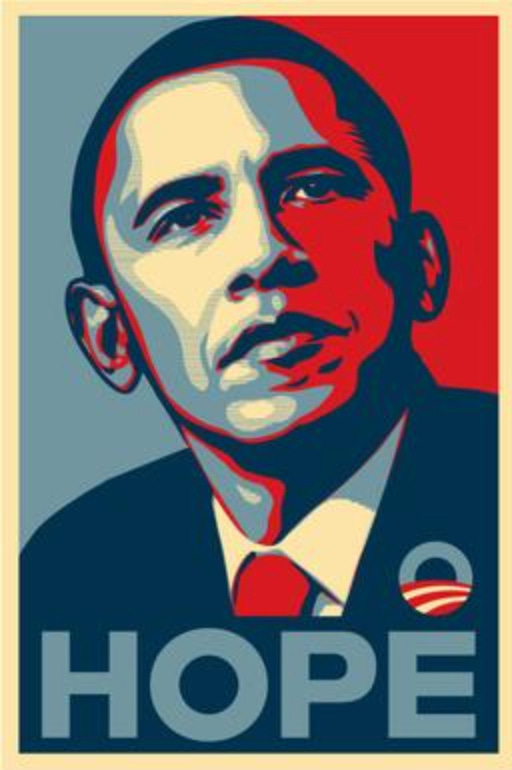
Obama’s political rhetoric frequently centered on hope as a transformative force. However, Warren (2015) argues that the politics of hope operates as a mechanism that recodes ongoing subjection as deferred possibility.
Rather than confronting structural conditions directly, hope functions as a substitute for material change. It transforms despair into anticipation and struggle into symbolic progress.
Within plantation politics, hope operates as a containment strategy. It channels dissatisfaction into continued participation in systems that do not fundamentally alter the conditions producing that dissatisfaction. In this way, hope becomes not a pathway to transformation, but a mechanism that sustains the existing order.
This produces a recursive political loop in which continued participation is interpreted as progress, even as underlying conditions remain unchanged.
The Boundaries of Blackness
According to accounts of his early life, Obama came to understand that fully identifying as Black was essential to his political trajectory. Obama’s “Black” parent did not descend from U.S. slavery, yet he is able to claim a Black identity that is politically legible within American racial discourse.
Plantation politics critiques the boundaries of Blackness in relation to Black elites, showing how elite incorporation can reshape and deploy Black identity in ways that remain aligned with existing power structures rather than disrupting them (Cooper, 2024).
Rodriguez (2011) describes this as the “Black presidential non-slave,” a symbolic formation that detaches Blackness from the historical experience of slavery while reinforcing the mythology of racial progress. Obama’s rise is symbolically positioned outside the historical legacy of slavery, creating the illusion that Blackness is no longer tied to subjugation. But this “exception” actually reinforces the underlying system by masking it.
Obama represents the mystical “Black excellence,” and his presidency provides an anesthetizing symbolism that insulates against confronting the structural limits placed on Black life.
Plantation Politics and the Illusion of Agency
Reed (1996) critiqued Obama three decades ago as a foundation-backed, neoliberal figure whose politics relied on the language of community and authenticity while avoiding structural transformation and democratic mass mobilization. His critique emphasized small-scale solutions, kitchen-table intimacy, and the elevation of process over program. Obama’s political trajectory reflects this pattern.
Gilens and Page (2014) demonstrate that economic elites and organized business interests exert substantial influence over U.S. policy, while average citizens have little or no independent influence.
Some right-wing conservatives and those that endorse conservative and authoritarian ideologies may attempt to distort this post as an endorsement of their positions. Plantation politics focuses on democratic liberalism precisely because liberal ideology is more effective at obscuring anti-Blackness than conservative or right-wing ideologies, which tend to operate in more overt and less ambiguous ways (Murakawa, 2014). The majority of Black people align with liberal and progressive politics, making it a more effective site of management, containment, and ideological control (Cooper, 2024).
Conclusion
Obama’s presidency is not simply a symbol of racial progress or Black excellence, but a case study in how representation can coexist with the preservation of structural inequality. The elevation of symbolic milestones does not dismantle underlying systems of domination; it can instead obscure them.
Plantation politics clarifies how inclusion, rhetoric, and limited forms of representation can operate as mechanisms of governance, managing dissent while maintaining existing hierarchies. What appears as progress may, in practice, reflect the reconfiguration rather than the disruption of power (Cooper, 2024).
This essay is part of a broader series examining how plantation politics operates across domains including activism, mental health, politics, culture, and knowledge production.
Be on the lookout for Plantation Politics – Politicians: A Case Study of Kamala Harris (Part II).
References
Achen, C. H., & Bartels, L. M. (2016). Democracy for realists: Why elections do not produce responsive government. Princeton University Press
Black Voter Project. (2024). 2024 National BVP Study. https://blackvoterproject.com/2024-national-bvp-study
Cooper, R., & Bruenig, M. (2017). Foreclosed: Destruction of Black wealth during the Obama presidency. People’s Policy Project. www.peoplespolicyproject.org/wp-content/uploads/2017/12/Foreclosed.pdf
Cooper, Y. (2024). Black men and racial trauma: Impacts, disparities, and interventions. Routledge.
Daniels, C. M. (2024, October 11). Obama faces backlash for comments toward Black men. The Hill. https://thehill.com/homenews/race-politics/4929604-obama-backlash-black-men
Friedersdorf, C. (2012, May 29). Under Obama, men killed by drones are presumed to be terrorists. The Atlantic. https://www.theatlantic.com/politics/archive/2012/05/under-obama-men-killed-by-drones-are-presumed-to-be-terrorists/257749
Gilens, M., & Page, B. I. (2014). Testing theories of American politics: Elites, interest groups, and average citizens. Perspectives on Politics, 12(3), 564–581.
Hosie, R. (2017, May 3). Barack Obama proposed to a different woman before Michelle. The Independent. https://www.the-independent.com/life-style/before-michelle-barack-obama-sheila-miyoshi-jager-engagement-chicago-us-president-david-j-garrow-a7714771.html
Interview Archive. (2024, July 25). Bobby Rush interview Obama in pursuit of a more perfect union [Video]. YouTube.
Jackson, D. (2014, October 20). Obama to backers: Get “Cousin Pookie” to vote. USA TODAY. https://www.usatoday.com/story/theoval/2014/10/20/obama-cousin-pookie-congressional-elections/17603991
Jones, A. (2000). Gendercide and genocide. Journal of Genocide Research, 2(2), 185-211.
Katz, L. F., & Krueger, A. B. (2019). The rise and nature of alternative work arrangements in the United States, 1995–2015. ILR review, 72(2), 382-416.
Kreft, A. K., & Agerberg, M. (2024). Imperfect victims? Civilian men, vulnerability, and policy preferences. American Political Science Review, 118(1), 274-290.
Murakawa, N. (2014). The first civil right: How liberals built prison America. Oxford University Press.
Reed, A. Jr. (1996, January 16). The Curse of Community. Village Voice.
Rodriguez, D. (2011). The Black presidential non-slave: Genocide and the present tense of racial slavery. In J. Go (Ed.), Rethinking Obama (Political power and social theory, Vol. 22, pp. 17–50). Emerald Group Publishing Limited.
Rushe, D. (2012, November 1). US has added 1.1m new millionaires under Obama, says study. The Guardian. https://www.theguardian.com/business/2012/nov/01/us-new-millionaires-obama
Siegel, J. (2023, March 28). A guide to understanding the hoax of the century: Thirteen ways of looking at disinformation. Tablet. https://www.tabletmag.com/sections/news/articles/guide-understanding-hoax-century-thirteen-ways-looking-disinformation
Tilove, J. (2008, January 31). “Pookie” keeps popping up in Obama’s speeches. Newhouse News Service. https://www.chron.com/life/article/Pookie-keeps-popping-up-in-Obama-s-speeches-1788973.php
Warren, C. L. (2015). Black nihilism and the politics of hope. CR: The New Centennial Review, 15(1), 215–248.
Williams, P. (2021, September 29). Barack Obama is a war criminal. Harvard Political Review. https://harvardpolitics.com/obama-war-criminal