

Narcissism and Celebrity Culture

The term narcissist is overused in popular culture, but celebrity culture rewards many of the traits associated with narcissism: attention seeking, entitlement, exhibitionism, grandiosity, and the pursuit of admiration. The question is not whether every celebrity is a narcissist. The more important question is what happens when a culture gives narcissistic traits credibility, authority, and influence.
This becomes especially important when celebrities, social media personalities, and podcasters are treated as authorities beyond their areas of expertise. Many people exhibit narcissistic traits without meeting the clinical threshold for a formal diagnosis. Approximately 1 to 2 percent of the general population meets criteria for narcissistic personality disorder (NPD), but narcissistic traits are much more common and can shape public behavior even when they do not reach the level of a clinical disorder (Weinberg & Ronningstam, 2022).
This essay is not an attempt to diagnose celebrities. It is an examination of how celebrity culture rewards narcissistic traits and how those traits become especially consequential when celebrities are treated as authorities on Black life.
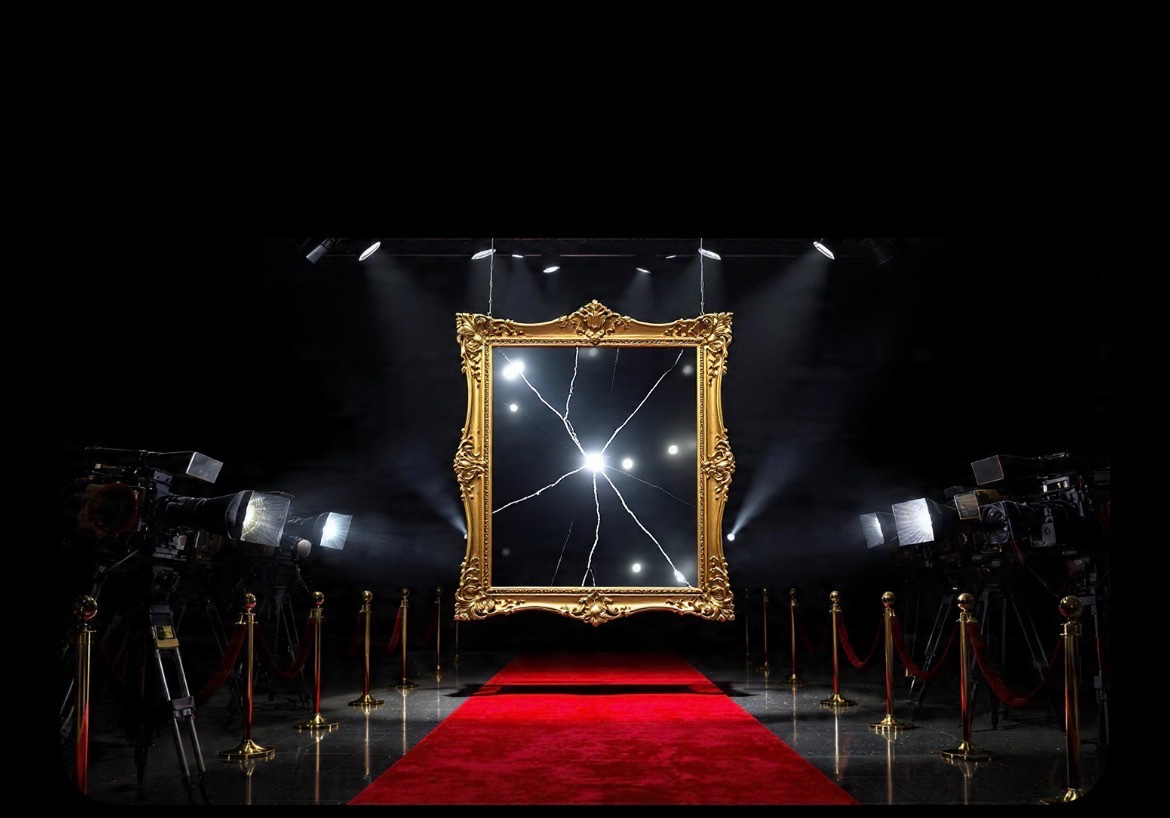
Celebrities are often protected from ordinary scrutiny. Most people, including researchers, have limited access to celebrities, while celebrities have access to large audiences through media, social media, and celebrity worship. This imbalance matters. Celebrities can speak to millions of people, shape public discourse, and influence how audiences understand politics, identity, relationships, success, and suffering.
Young and Pinsky (2006) found that celebrities were significantly more narcissistic than the general public. In the general population, men tend to score higher on narcissism than women, but their study found that female celebrities scored higher than male celebrities. Reality television personalities had the highest levels of narcissism, followed by comedians, actors, and musicians. Importantly, their findings suggested that many celebrities had narcissistic tendencies before entering the entertainment industry. As Young and Pinsky (2006) observed, reality television created an outlet for narcissistic individuals, including many with limited abilities, to believe they could succeed in entertainment.
This finding is important because celebrity culture does not merely reflect narcissism. It may select for it, reward it, and amplify it.
Narcissistic Traits
Narcissistic traits tend to be measured through dimensions such as authority, exhibitionism, superiority, entitlement, exploitativeness, self-sufficiency, and vanity. Authority refers to the desire for leadership, control, and success. Exhibitionism refers to the need for attention and admiration. Superiority reflects the belief that one is better than others. Entitlement refers to the expectation of special treatment, deference, and respect without reciprocity. Exploitativeness reflects the willingness to manipulate others for personal gain. Self-sufficiency captures autonomy and belief in oneself. Vanity reflects admiration of one’s physical appearance (Ackerman et al., 2011; Briganti & Linkowski, 2020; Emmons, 1984).
Not all narcissistic traits are equally harmful. Some traits, such as confidence and self-sufficiency, may help people pursue ambitious goals. However, entitlement and exploitativeness are among the most maladaptive aspects of narcissism because they shape how individuals relate to other people (Ackerman et al., 2011).
Narcissism is often discussed as if it has only one form, but research distinguishes between grandiose and vulnerable presentations. Grandiose narcissism is commonly associated with arrogance, dominance, status seeking, overt self-importance, and the desire to be admired. Vulnerable narcissism may appear more fragile, defensive, distrustful, emotionally reactive, or wounded. Despite these differences, both presentations center the self and can involve entitlement, envy, antagonism, and difficulty tolerating criticism or threats to self-image (Miller et al., 2021; Neufeld & Johnson, 2016). Both forms matter because celebrity culture can reward the pursuit of status, admiration, attention, and dominance while framing these traits as confidence, authenticity, or leadership.
Most people who display narcissistic traits do not meet criteria for NPD. Still, narcissistic traits can shape public behavior, especially when attention, admiration, reputation, and status become the basis of influence. Narcissistic traits can also shape how people handle criticism, disappointment, rejection, accountability, and threats to self-image.
This is where celebrity culture becomes important. A celebrity economy often rewards visibility, self-promotion, dominance, status competition, and the ability to turn attention into profit. In that environment, traits that might damage ordinary relationships can become professional assets.
Celebrity Worship and Public Credibility
Celebrity worship gives public figures a form of authority they often have not earned. Audiences may confuse visibility with knowledge, popularity with expertise, and charisma with critical thinking. Celebrity influence is not simply entertainment. It can become a psychological and consumer relationship organized around admiration, identification, fantasy, and perceived similarity.
Davis et al. (2025) found positive relationships among celebrity worship, narcissism, materialism, and perceived similarity with a favorite celebrity. Notably, perceived similarity and vulnerable narcissism uniquely predicted celebrity worship, while both vulnerable and grandiose narcissism uniquely predicted materialism. This matters because celebrity worship is not only about liking a public figure. It can become a psychological attachment in which people see themselves in celebrities, admire their lifestyles, and absorb the values attached to their visibility.
This helps explain why celebrities can move so easily from entertainment into politics, health advice, relationship commentary, racial discourse, and cultural interpretation. Their authority often comes not from knowledge or accountability, but from visibility.
The problem is not that celebrities have opinions. The problem is that celebrity culture trains audiences to treat attention as evidence of importance.
Black Celebrity and Narcissism
There is no other ethnoracial group in the United States where celebrities are so routinely positioned as spokespersons for the group as a whole. Black celebrities are often treated not merely as entertainers, athletes, artists, or media personalities, but as interpreters of Black life. This creates a serious problem when celebrity authority is organized around narcissistic traits such as entitlement, exhibitionism, authority seeking, and exploitation (Cooper, 2024).
The pursuit of fame can be understood as a narcissistically organized venture, particularly when it depends on admiration, visibility, status, and the ongoing conversion of attention into influence. Many celebrities now maintain visibility through podcasts, social media platforms, interviews, brand partnerships, reality television, commentary, and public controversy. This is not always about art. Often, it is about maintaining relevance.
Much of the “content” produced by Black celebrities appears organized around exploitation, entitlement, authority, exhibitionism, and self-sufficiency. Young and Pinsky (2006) found that comedians, musicians, reality television personalities, and actors varied across narcissistic traits, but all four groups scored relatively high in self-sufficiency and exhibitionism. This matters because self-sufficiency may help explain why celebrity discourse so often privileges individual narratives of confidence, self-belief, discipline, and personal effort over structural analysis, while exhibitionism helps explain the constant need to remain visible, provocative, and culturally central. The same study found that comedians and reality television personalities scored highest in exploitativeness; comedians and musicians scored highest in entitlement; and reality television personalities, comedians, and actors scored highest in authority. This research should be extended to social media personalities, influencers, podcasters, and content creators, especially given how much contemporary cultural authority now flows through digital platforms.
Black celebrities are often tied to white capital and are largely apolitical as a class. When they enter political discourse, their analysis often remains superficial and tends to reproduce neoliberal or conservative ideologies. Their public messages frequently revolve around white recognition, assimilation, entrepreneurship, individual mindset, discipline, personal responsibility, and exceptionalism rather than collective uplift or structural analysis (Cooper, 2024).
This is not neutral. It is ideological.
Many Black celebrities launder myths of Black success through their personal narratives. They present themselves as evidence that talent, confidence, discipline, and self-belief can overcome structural inequality. Their stories become templates for how Black people are supposed to understand poverty, anti-Blackness, and failure. The exceptional celebrity becomes proof that the structure can be defeated through individual will.
This is why celebrity discourse so often traffics in bootstrap theory, belief in self, positive thinking, sensational empowerment, and abstract claims about “representing the culture” or “moving the culture forward.” These phrases sound affirming, but they often function as ideological cover. They convert structural harm into a problem of mindset and transform collective suffering into motivational content (Cooper, 2024).
This is one of the most damaging features of celebrity culture. It turns structural inequality into a personality test.
Within this framework, the Black celebrity does not merely entertain. The Black celebrity becomes a symbol used to discipline ordinary Black people. If a rapper, athlete, actor, influencer, or podcaster can “make it,” then poverty becomes a failure of mindset. If a celebrity becomes rich, then capitalism appears redeemable. If a celebrity receives white recognition, then assimilation is rebranded as progress.
This is where narcissistic traits and plantation politics converge. The narcissistic pursuit of visibility aligns with the institutional need for manageable Black representatives. Celebrities who center themselves, dramatize their own exceptionalism, and speak in the language of individual triumph become useful to dominant institutions because they redirect attention away from systems and toward personalities.
The Problem of Misplaced Authority
The issue is not that artists should never speak. The issue is that artistry does not automatically confer expertise. A person can be a brilliant musician, athlete, actor, or comedian and still be politically shallow, historically uninformed, emotionally immature, or narcissistically invested in their own image.
I can appreciate the artistry of many performers while refusing to treat them as authorities outside of entertainment.
This distinction matters. Celebrity worship often collapses talent into wisdom. It assumes that the ability to command attention means one has something meaningful to say. But attention is not analysis. Charisma is not knowledge. Fame is not accountability.
Within this dynamic, Black celebrities are often positioned as oracles and, at times, quasi-deified figures whose visibility is mistaken for knowledge. When public attention turns to anti-Blackness, state violence, or the material conditions facing Black communities, celebrities are frequently invited to interpret the matter for the public, offering predictable, conciliatory, or individualistic explanations that remove Black suffering from political, economic, and structural analysis. In this way, celebrity worship does not simply elevate entertainers. It transforms them into symbolic authorities whose presence can pacify dissent, redirect attention, and contain demands for reparations, redistribution, and transformative public policy (Cooper, 2024).
When Black celebrities speak on issues affecting Black communities, they are often granted authority without responsibility. They can circulate simplistic claims, reinforce stereotypes, promote bootstrapping myths, or speak over people with deeper knowledge and closer proximity to the conditions being discussed. Meanwhile, scholars, clinicians, organizers, and community members who offer structural analyses may be ignored because they lack celebrity visibility.
This is how celebrity culture distorts public knowledge.
Conclusion
Narcissism is not just a clinical issue. It is also a cultural problem when societies reward narcissistic traits with money, attention, legitimacy, and influence. Celebrity culture elevates people who are skilled at being seen, but being seen is not the same as being knowledgeable, ethical, or accountable.
If people knew that their favorite celebrity, podcaster, or influencer was motivated by entitlement, exhibitionism, authority seeking, exploitation, or the pursuit of admiration, would they continue to surrender their critical thinking? Would celebrity worship cease? Would these individuals still be positioned as authorities on Black people and Black communities?
The problem is not simply narcissistic celebrities. The deeper problem is a culture that mistakes narcissistic visibility for truth.
Until that confusion is challenged, celebrity worship will continue to convert fame into authority, attention into credibility, and performance into knowledge.
References
Ackerman, R. A., Witt, E. A., Donnellan, M. B., Trzesniewski, K. H., Robins, R. W., & Kashy, D. A. (2011). What does the narcissistic personality inventory really measure? Assessment, 18(1), 67–87.
Briganti, G., & Linkowski, P. (2020). Exploring network structure and central items of the Narcissistic Personality Inventory. International Journal of Methods in Psychiatric Research, 29(1), e1810.
Cooper, Y. (2024). Black men and racial trauma: Impacts, disparities, and interventions. Routledge.
Davis, C., Locker Jr., L., & Williams, J. L. (2025). Celebrity worship and materialism: A focus on narcissism and perceived similarity with a celebrity. International Journal of Psychology, 60(4), e70067.
Emmons, R. A. (1984). Factor analysis and construct validity of the narcissistic personality inventory. Journal of Personality Assessment, 48(3), 291–300.
Miller, J. D., Back, M. D., Lynam, D. R., & Wright, A. G. (2021). Narcissism today: What we know and what we need to learn. Current Directions in Psychological Science, 30(6), 519–525.
Neufeld, D. C., & Johnson, E. A. (2016). Burning with envy? Dispositional and situational influences on envy in grandiose and vulnerable narcissism. Journal of Personality, 84(5), 685–696.
Weinberg, I., & Ronningstam, E. (2022). Narcissistic personality disorder: Progress in understanding and treatment. Focus, 20(4), 368–377.
Young, S. M., & Pinsky, D. (2006). Narcissism and celebrity. Journal of Research in Personality, 40(5), 463–471.